
Introduction
In fact, there is a secret vow that devotees of Lord Shiva make to themselves - sometime in the future, I will visit all twelve. 12 Jyotirlingas in India are not just religious temples listed somewhere on a map. According to beliefs, these are places of manifestation of Lord Shiva in the form of eternal light. For centuries, people travelled by foot, horseback or nowadays, by plane in order to worship each of these temples.
This journey will take you from the windy coast of Gujarat to the Himalayas covered in snow, from the ghats of Varanasi to the temple located on Rameshwaram Island. It will be amazing to witness how faith penetrates into every corner of Indian life. It is not surprising that Jyotirlinga Temples occupy the top of the ranking of the most significant Hindu Pilgrimage Places in India.
Whether you are planning a Jyotirlinga Darshan Yatra or exploring different destinations through Customized Tour Packages, proper travel planning can make your pilgrimage more comfortable. . Below you will find the story behind each shrine practical travel tips, a simple route plan and answers to questions.
What Makes the 12 Jyotirlingas in India So Sacred?
The term “Jyotirlinga” comes from two Sanskrit words: jyoti, meaning light, and linga, representing the form of Lord Shiva. According to a famous legend in the Shiva Purana, Brahma and Vishnu once argued about who was more powerful. However, to settle their dispute, Lord Shiva appeared as an endless pillar of blazing light and challenged them to find its beginning and end. While Vishnu travelled downwards to find the bottom, Brahma searched upwards to discover the top. However, neither of them could find the end of this divine pillar. As a result, the places where this sacred light is believed to have touched the Earth became known as the Jyotirlingas.
India has thousands of Lord Shiva temples. However, these twelve Jyotirlingas hold special religious significance because devotees believe that Lord Shiva manifested himself here as a Swayambhu (self-manifested form). Furthermore, this belief is reflected in the ancient Sanskrit hymn known as the Dwadasha Jyotirlinga Stotram, which describes the spiritual importance of all twelve sacred shrines. Therefore, visiting these temples is considered a deeply meaningful experience for Shiva devotees.
Why Devotees Undertake the Full Circuit
It is a lifelong objective of many devotees to complete all twelve pilgrimages. It is believed that this will help clear out one’s bad karma and achieve inner peace. Some people visit these sites simply because of the energy present at these sacred places. Whatever be the reason, the significance of these sites cannot be overstated since they qualify as some of the most Spiritual Places to Visit in India even for non-religious travelers.
Each temple has its unique legend, architecture, and practices which make the whole trip all the more interesting. One does not have to repeat the same process twelve times but discovers twelve different aspects of the religion.
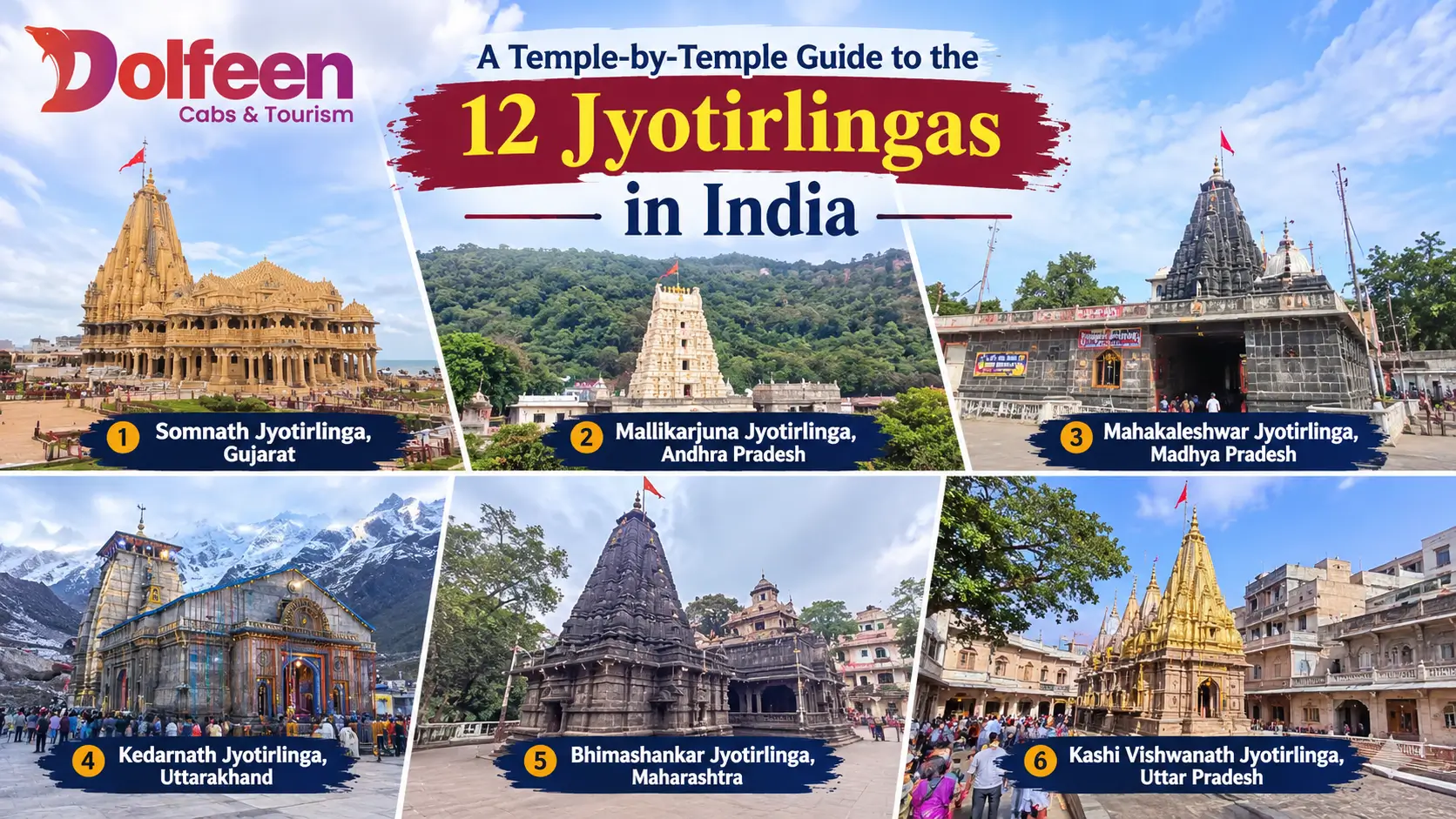
A Temple-by-Temple Guide to the 12 Jyotirlingas in India
The 12 Jyotirlinga Temples are scattered in nine different states of India. Here are more detailed descriptions of all 12 Jyotirlinga Temples in India and the must know information about them:
1. Somnath Jyotirlinga, Gujarat
Somnath Jyotirlinga Temple is located at Prabhas Patan by the shore of the Arabian Sea and considered the first among the 12. This temple survived attacks and destruction many times and was reconstructed each time. The modern temple was built in 1951. Try to visit the temple in the evening when there is a sound and light show with crashing waves near the temple.
2. Mallikarjuna Jyotirlinga, Andhra Pradesh
Mallikarjuna Jyotirlinga Temple is situated in the Nallamala Hills in Srisailam and considered the only Jyotirlinga that is also a Shakti Peetha. God Shiva is worshiped there in the form of Mallikarjuna and goddess Parvati – in the form of Bhramaramba. A beautiful trip through the ghats covered with forests and sightseeing of Krishna River will become an unforgettable experience. The nearest big city is Hyderabad – it is located about 215 km from the temple.
3. Mahakaleshwar Jyotirlinga, Madhya Pradesh
This holy shrine of Mahakaleshwar Jyotirlinga, located in the old city of Ujjain, is noted for its early morning Bhasma Aarti, during which the lingam receives an offering of sacred ashes. This god faces southward, which is rare and especially powerful. Reservations for this Bhasma Aarti can be done via the Internet beforehand as it is popular among devotees.
4. Kedarnath Jyotirlinga, Uttarakhand
Located at an elevation of 3,583 meters in the Garhwal Himalayas, Kedarnath Jyotirlinga is the tallest among the twelve Jyotirlingas. The temple is operational for just six months, typically from late April/May to Diwali, when the entire shrine gets covered under snow during winter. The approach route from Gaurikund is a 16-km long trek, although ponies, palanquins, and helicopters can help you reach there. So, make sure to do yatra registration in advance; visit the official portal.
5. Bhimashankar Jyotirlinga, Maharashtra
Bhimashankar Jyotirlinga, located in the Sahyadri Hills 110 km away from Pune, is encircled by a wildlife sanctuary. It is considered the starting point of the Bhima River. The temple's Nagara architecture looks great, and the region becomes misty and green during the monsoons. Therefore, pack rain gears if you visit between June and September.
6. Kashi Vishwanath Jyotirlinga, Uttar Pradesh
Very few destinations have such spiritual energy as Varanasi. Located by the banks of River Ganga, the Kashi Vishwanath Jyotirlinga temple has many beliefs attached to it such as the belief of salvation after dying at Kashi. The Kashi Vishwanath Dham Corridor, built in 2021, connects this temple directly to the river ghats. Don’t forget to attend the evening Ganga Aarti at the Dashashwamedh Ghat.
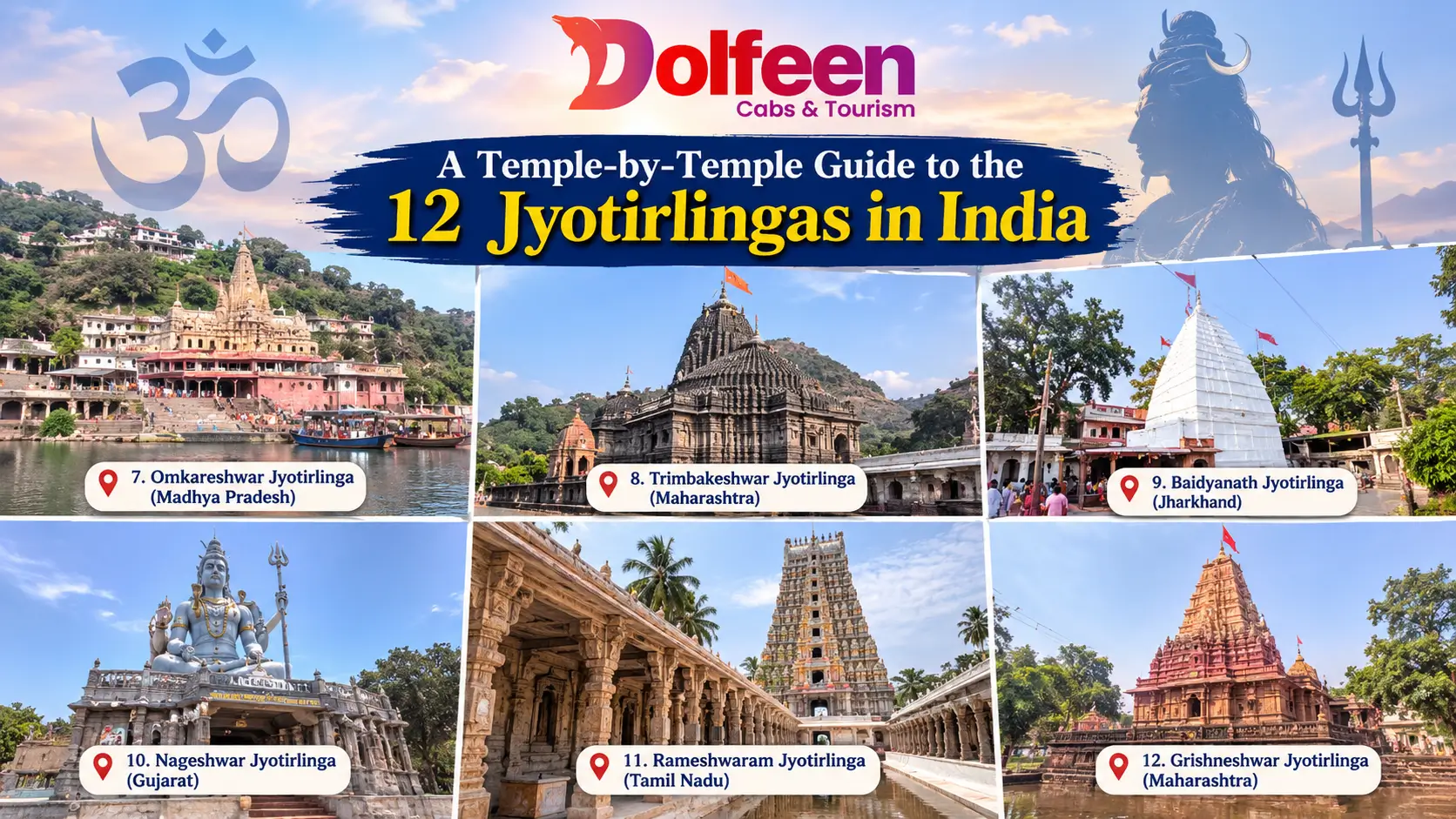
7. Omkareshwar Jyotirlinga, Madhya Pradesh
Omkareshwar Jyotirlinga is situated on Mandhata Island in the Narmada River. From above, the island is said to resemble the sacred “Om” symbol. Many pilgrims also visit the Mamleshwar Temple, as both shrines are traditionally considered part of the same Jyotirlinga. Located around 140 km from Ujjain, Omkareshwar is easy to combine with a visit to Mahakaleshwar Temple. Travellers can plan both destinations together with an Ujjain Tour Package for a convenient and spiritually enriching pilgrimage.
8. Trimbakeshwar Jyotirlinga, Maharashtra
Near Nashik, Trimbakeshwar Jyotirlinga is special because its linga has three small faces representing Brahma, Vishnu, and Shiva. The Godavari River originates in the nearby Brahmagiri hills. Many families come here for rituals like Narayan Nagbali and Kaal Sarp puja.
9. Baidyanath Jyotirlinga, Jharkhand
At the Deoghar location, the Baidyanath Jyotirlinga, also known as the Vaidyanath, is connected with the story of Ravana who had sacrificed his heads to please Lord Shiva. During the Shravan period, hundreds of thousands of kanwariyas covered a distance of around 105 km from Sultanganj by carrying the Ganga water. However, some pilgrims believe that the Vaijnath temple located at Parli in Maharashtra is the real Jyotirlinga.
10. Nageshwar Jyotirlinga, Gujarat
Nageshwar Jyotirlinga Temple is located midway between Dwarka and Bet Dwarka. There is a huge statue of Shiva sitting on the entrance which can be seen from afar. The people worship here to protect themselves against any kind of poisoning in general as well as any sort of emotional trauma. Similar to that of Baidyanath, there is yet another claim, and that is of Aundha Nagnath temple in Maharashtra.
11. Rameshwaram Jyotirlinga, Tamil Nadu
Rameshwaram Jyotirlinga, present inside Ramanathaswamy Temple, is linked with Ramayana. It is believed that Lord Rama used to worship Shiva here before going to Lanka. The temple is famous for its long pillared corridors and the 22 wells which are considered sacred for having a holy bath.
12. Grishneshwar Jyotirlinga, Maharashtra
Grishneshwar Jyotirlinga, the last one of twelve, is located in proximity to Ellora Caves in Chhatrapati Sambhajinagar (Aurangabad). The temple is the smallest of all the Jyotirlinga temples, but the red stone carvings make it look beautiful. It is a tradition for men to wear nothing else than dhoti while worshipping in the sanctum sanctorum.
How to Plan Your Jyotirlinga Darshan Yatra
A tour covering 12 temples located across various parts of India requires some level of planning. However, it is a manageable experience since with proper knowledge of the route and some preparation, it is very possible to make this journey especially for beginners and elders.
Understanding the 12 Jyotirlinga Route Map
The 12 Jyotirlinga Route Map reveals that most of the temples have a natural clustering depending on the regions they belong to. Here is how the clustering helps in saving time and money:
West (Gujarat): Somnath and Nageshwar, 235km apart
Central (Madhya Pradesh): MMahakaleshwar and Omkareshwar, 140km apart
Maharashtra: Trimbakeshwar, Grishneshwar, and Bhimashankar; all accessible via roads from Nashik, Aurangabad, or Pune
North: Kedarnath in Uttarakhand and Kashi Vishwanath in Uttar Pradesh
East: Baidyanath in Jharkhand, which pairs well with Varanasi
South: Mallikarjuna in Andhra Pradesh and Rameshwaram in Tamil Nadu
Most travelers choose to travel to one or two regions at once. This also helps in making the trip to Kedarnath as it has limited opening periods.
Best Time to Visit
As far as most of the places are concerned, the period between October to March is the best season to visit. There is pleasant weather during this time along with smooth traveling. If Mahashivratri is to be celebrated, then this would fall between the months of February and March and the whole event becomes more significant though there would be a lot of crowds. July-August period is also considered sacred for visiting the Jyotirlinga though there will be a lot of rainfall and queues. Kedarnath is an exception and should be planned between May-June and September-October to avoid landslides.
Choosing a 12 Jyotirlinga Tour Package
It can become really difficult to arrange trains, accommodation, temple visits and other things. Therefore, 12 Jyotirlinga Tour Packages can help you in this. There are various tour operators who provide Indian Temple Tour Packages and Religious Tour Packages in India. IRCTC also arranges Bharat Gaurav pilgrim trains that cover various Jyotirlingas in one train journey.
Some key things to look at while making a choice:
Temple inclusion - as some tour packages don't include Kedarnath
VIP or Fast Darshan Tickets provision
Quality of hotels and distance from temples
Elderly travel facilitation - wheelchairs or ponies
Cancellation policy, especially for Himalayan part
The Best Pilgrimage Tours in India may not be the most economical. Find a reasonable balance between convenience, fair pricing and good reviews.
Practical Tips for Your 12 Jyotirlinga Darshan Tour
A few simple habits can make your 12 Jyotirlinga Darshan Tour smoother:
Book online darshan and aarti slots where available, especially at Ujjain, Varanasi, and Somnath.
Dress modestly. Traditional wear is preferred, and some temples have strict dress rules.
Do not carry phones and leather goods with you, as most temples do not permit them within the premises.
Bring a light bag, some cash for the temple donations, and a water bottle.
Before visiting Kedarnath, it would be wise to get yourself checked up, as the altitude may pose a problem.
Always reach the temple early in the morning.
How Long Does It Take to Visit All 12 Jyotirlingas in India?
If you keep traveling using flights, railways, and road travels, then in about 18 to 25 days, all these 12 shrines can be covered. A somewhat relaxed itinerary might take a month, and some people choose to divide the trip into 3-4 parts, which can be undertaken over the period of two years.
A Sample Regional Itinerary
This could be one of the many ways:
Trip 1 (5–6 days): Visit from Indore city through Omkareshwar and Mahakaleshwar and then go to Gujarat via Somnath and Nageshwar..
Trip 2 (5–6 days): While visiting these temples, travellers can also plan nearby attractions through Sightseeing Tours in India and enjoy a more complete travel experience.
Trip 3 (6–8 days): Kedarnath during its season and then move towards Varanasi to visit Kashi Vishwanath temple and Baidyanath at Deoghar.
Trip 4 (5–6 days): From Hyderabad, Mallikarjuna would be visited and move ahead to Rameshwaram.
Other Shiva Temples Worth Adding
While you are on the road you may want to see more Famous Lord Shiva Temples in India. Amarnath Cave in Kashmir, Lingaraj Temple in Bhubaneswar Brihadeeswarar Temple in Thanjavur and Pashupatinath across the border in Nepal are all inspiring additions. Together these Shiva Temples, in India show how widely and beautifully Shiva is worshipped across the subcontinent. They also rank among the rewarding Religious Places to Visit in India for anyone who loves history and architecture.
Conclusion
A journey to the twelve Jyotirlingas is more than a list of temples to visit. It is a thoughtful walk through India’s history, its changing landscapes and its living traditions. You stand by the waves at Somnath, climb high into the clouds at Kedarnath and sit quietly by the Ganga in Varanasi. Each place touches you in a way. Each place leaves a mark.
The journey does not have to be made in one go but one can start from the temple nearest to him/her and plan the journey according to his/her state of health and finances. Given proper planning and support, such a pilgrimage may well prove to be one of the most enriching experiences in one’s life. Har Har Mahadev!
FAQs
1. Which is the first Jyotirlinga among the twelve?
Somnath in Gujarat is traditionally considered the first. Most pilgrims like to begin their journey there.
2. Can senior citizens visit all 12 Jyotirlingas?
Yes. Most temples are easy to reach by road, and Kedarnath offers ponies, palanquins, and helicopter services for those who cannot trek.
3. Which Jyotirlinga is the most difficult to reach?
Kedarnath is the toughest because of its high altitude and the 16 km trek. It is also open only for about six months a year.
4. Is it necessary to visit the Jyotirlingas in a specific order?
No strict order is required. Most people follow a route that saves travel time, though some like to start at Somnath.
5. What is the best season for a Jyotirlinga trip?
October to March suits most temples. For Kedarnath, plan between May and June or in September and October.