
Introduction
Planning a trip can be exciting, whether you are exploring a new country, visiting family, or taking a much-needed break. However, unexpected problems can affect your travel plans. You may face illness, flight cancellations, lost baggage, or travel delays. These situations can also lead to unexpected expenses.
Travel insurance in Rajkot can provide financial protection against certain unexpected events during your trip. Depending on the policy, coverage may include medical emergencies, trip cancellations, lost baggage, travel delays, and other listed risks.
Indian travelers, particularly those intending to take a trip out of the country, need to know the basics of travel insurance cover, exclusions, prices, and claims before buying one. This is an introductory guide on travel insurance for beginners.
What Is Travel Insurance?
Travel insurance protects you against certain unexpected events during a trip. Depending on the plan, it can cover medical emergencies, trip cancellations, baggage issues, travel delays, and other listed risks.
For example, imagine you travel from India to Europe and need emergency medical treatment. Healthcare costs abroad can become expensive quickly. If your travel insurance covers emergency medical expenses, your insurer may reimburse eligible costs under the policy terms.
Travel insurance can also help when you lose checked baggage. Some policies may provide assistance if you face a covered trip interruption.
Coverage can vary between insurers and policies. Always read the policy terms before you buy. Check the coverage limits, exclusions, and conditions carefully. Do not assume every travel insurance plan offers the same protection.
How Travel Insurance Works
Understanding how travel insurance works is simple. You choose a plan for a specific trip or travel period. Then, you pay the required premium. Your insurer provides coverage based on the policy terms. These terms include covered risks, exclusions, deductibles, and coverage limits.
If a covered event occurs during your trip, contact your insurance company or assistance provider. Follow their claim process and submit the required documents. Depending on your policy, the insurer may pay eligible expenses directly. In other cases, you may need to pay first and request reimbursement later.
For example, you may buy international travel insurance before your trip. Later, you may face an eligible medical emergency. Contact your insurer and follow the required steps.
Provide the necessary documents and information for your claim. The insurer will review your claim according to the policy terms. If your claim meets the requirements, the insurer will process it accordingly.
What Does a Travel Insurance Policy Cover?
A travel insurance policy can offer types of protection. Depending on the plan it may cover emergency expenses, hospitalization costs, emergency evacuation, trip cancellation for reasons that are covered, trip interruption, lost or delayed baggage, passport loss and personal liability in some situations.
Coverage varies a lot, between travel insurance plans. So it is important to look at the benefits, limits, conditions and what is not covered before you buy.
Why Is Travel Insurance Needed?
For novice travelers, the question often arises regarding why you need travel insurance if you have already paid for the flight and hotel bookings?
This is mainly related to the protection of your finances from possible unforeseen circumstances. There can be unforeseen costs during the trip, especially if you travel abroad.
For example, an illness can lead to high medical expenses, a canceled trip to losses due to non-refundable booking, and a loss of luggage, leading to additional costs due to the purchase of essentials.
The important benefit of travel insurance is that it allows avoiding possible financial losses from certain events that are provided for by the insurance policy.
This becomes especially important if you are traveling abroad since emergency services, including medical services, can cost quite a lot.
Protection Against Unexpected Travel Costs
Travel insurance can help you manage unexpected costs during your trip. Your coverage depends on the policy and benefits you choose.
For example, you may get sick while traveling abroad. You may also face a covered flight delay or lost baggage. Some policies can help with eligible trip cancellations. Certain travel insurance plans also cover emergency evacuation. Some plans may help with costs when you end a trip early for a covered reason. Without travel insurance, you may need to pay these expenses yourself. However, travel insurance cannot cover every travel problem.
Instead, it helps you manage specific situations listed in your policy. Check your coverage, limits, exclusions, and conditions before your trip. This can help you understand the protection your travel insurance provides.
Instances When Travel Insurance Becomes Relevant
Travel insurance becomes relevant under such circumstances when you are undertaking international travel, are on a long journey, are traveling with family members, have planned multiple international travels or are traveling to places where insurance is mandatory.
For travelers from India international travel insurance might be required for some countries or visa applications. It is important to check the rules for your destination before you go since entry rules and insurance requirements can change.
What Does Travel Insurance Cover?
Depending on your policy, here is the answer to what is covered by the insurance. Travel insurance coverage varies from insurer to insurer and also on the basis of destination, length of the journey, age of the individual, chosen plan, and limit of cover.
There are policies that are basically medical oriented; however, some of them offer other travel coverages. Make sure to know the coverage limits and the conditions before purchasing one.
Travel Insurance and Medical Emergencies and Hospitalization Costs
Medical emergencies are a common reason travelers choose travel insurance. A suitable policy can help manage certain medical expenses during a trip.
Depending on your plan, travel insurance may cover emergency treatment, hospitalization, doctor's fees, ambulance services, or emergency evacuation. This coverage can prove useful in countries with high healthcare costs.
However, every policy has specific conditions and exclusions. Some plans may exclude certain pre-existing medical conditions, elective procedures, preventive visits, or risky activities.
Read your policy's medical coverage section before you travel. Check the coverage limits, exclusions, deductibles, and eligibility conditions. This helps you understand what your travel insurance may cover during a medical emergency.
Trip Cancellation and Trip Interruption
A trip cancellation option may compensate for the cost of certain prepaid and nonrefundable expenses when you cancel your trip for a covered reason.
Similar to that, trip interruption coverage can assist in certain expenses when you need to end your trip earlier due to a covered event.
The reasons for the trip cancellation or interruption depend on the type of travel insurance policy. It may cover some medical emergencies, some personal or family emergencies, or other events specified in your policy.
Delays and Missed Connections while Travelling
Delaying during travel might result in further costs incurred due to meals, accommodation, transport, or any other related costs. Some insurance travel policies do offer coverage for eligible delay cases after a certain waiting period.
There may be some cases where missed connections are also included in the travel insurance policy. Prior to depending on such a policy, ensure that you know the delay duration, reimbursement limits, reasons, documentation requirements, etc.
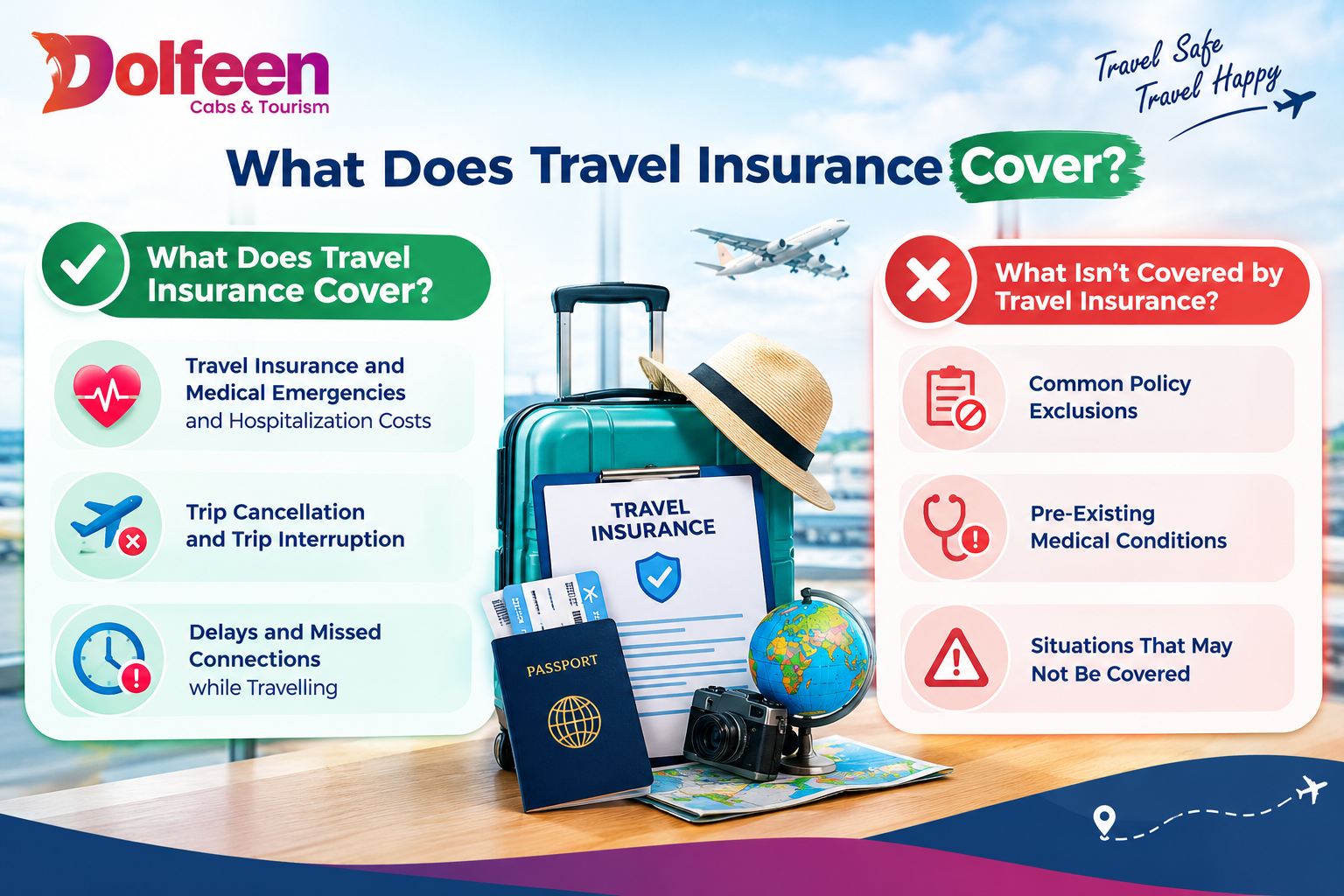
What Isn't Covered by Travel Insurance?
It is as important to be aware of exclusions as it is to know about the coverage of the policy.
The exclusions clause is included in the policy and lists circumstances where the insurer is not going to cover any costs. Different policies have different exclusions; therefore, it is necessary to read the policy language before buying one.
Common Policy Exclusions
Common exclusions can include travel against medical advice, specific risky activities, intentional or criminal actions, some alcohol/drug related incidents, undisclosed pre-existing conditions, and events that happen outside the coverage period.
However, it doesn't mean that all these exclusions apply to every policy. This depends on the insurance company and plan.
Pre-Existing Medical Conditions
The topic of pre-existing medical conditions requires special consideration.
While some insurance products do not cover any pre-existing condition, others cover these cases depending on certain conditions or under separate coverage.
In case you have a pre-existing condition, please disclose all relevant information when buying insurance. Otherwise, your claim could be complicated by your insufficient or inaccurate reporting of the information.
Situations That May Not Be Covered
Travelers should also be aware that insurance does not cover everything.
For instance, your arrival at the airport late and your missing the flight may be considered as a non-insurable situation. The same can be said about voluntary cancellation in case the reason behind such a decision does not fall into insured circumstances.
What Is the Cost of Travel Insurance?
Travel insurance depends on various factors as regards the cost. There is no one price for everyone traveling.
The price may be determined by your destination, age, duration of the journey, amount of coverage, type of policy, and extra cover options. International journeys may require a different coverage from domestic travel due to the different costs of treatment abroad.
Factors That Affect Travel Insurance Premiums
Several factors can affect your travel insurance premium. Your destination can influence the price. Some countries have higher healthcare costs or specific insurance requirements.
Trip duration can also affect the premium. Longer trips may require coverage for a longer period. Your age can influence the premium as well. Higher coverage limits may also increase the policy cost. Optional benefits can add to your premium. Family and group plans may also have different pricing structures.
Do not choose a policy based only on its low premium. Compare the coverage, limits, conditions, and exclusions before you buy.
Is It Worth the Cost to Purchase Travel Insurance?
The value of insurance for you is defined by your personal situation, destination, cost of the trip, and level of exposure to certain risks.
A relatively cheap premium can provide you with protection from certain unforeseen expenditures. On the other hand, lack of proper coverage can leave you unprotected.
What matters is not only how inexpensive the policy is, but what kind of protection you can get from it.
How to Choose Travel Insurance
Choosing the right travel insurance plan can feel confusing for beginners. Start by understanding your travel needs and risks. First, consider your destination and trip duration. Think about your planned activities and possible travel risks. Then, compare policies based on their coverage, not just their premiums.
Check the medical coverage limit before choosing a plan. Also, review emergency evacuation and trip cancellation benefits. Look at baggage coverage and travel delay protection as well. Review the policy's deductibles, exclusions, assistance services, and coverage period. These details can affect the protection you receive during your trip.
The right travel insurance plan can differ from one traveler to another. A family vacation may need different coverage than a business trip. Students, seniors, and adventure travelers may also have different requirements.
Indian travelers should also check their destination's insurance requirements. Some destinations may require specific coverage for entry or visa purposes.
If you need travel insurance for international trips from India, compare plans from legitimate insurance providers. Check the coverage, limits, exclusions, and policy conditions before making your choice.
How to Buy and Use Travel Insurance
After you have compared your options you can purchase travel insurance by contacting an insurer or using a distribution channel.
Before you make any payment check that your name, travel dates, destination, passport Assistance details, coverage limits and chosen benefits are all correct. Keep a copy and a printed copy of your travel insurance policy. Also keep the insurer’s emergency assistance number while you are traveling. I find it helpful to double‑check everything.
If you are looking for travel insurance for travelers the buying process is usually straightforward. However you should choose travel insurance that matches the destination and your own circumstances. I recommend choosing travel insurance that fits your needs.
If you live in Gujarat searching for travel insurance in Gujarat, travel insurance in Rajkot or international travel insurance in Rajkot can help you find insurance services. Still you should always verify the availability and the terms of the policy directly with the insurer or an authorized provider. I suggest you confirm details with the insurer.
When Should You Buy Travel Insurance?
It would be best if you considered buying travel insurance shortly after securing your travel arrangements.
Purchasing early may be vital since certain policy benefits and services, especially related to cancellations, could depend on the purchase time relative to your booking or departure dates.
Do not delay buying it until a problem arises. Insurance cannot be bought after the occurrence of the covered event. Be sure to check your policy's effective date and coverage conditions.
Travel Insurance Claims Process
Report any travel incident to your insurance company or assistance provider as soon as possible.
The travel insurance claims process starts with reporting the incident. Follow the instructions provided by your insurance company. You may need to collect several documents for your claim. These may include medical reports, police reports, airline documents, receipts, or other records.
Once you collect the required documents, complete the claim form. Submit the form and supporting documents according to the insurer's instructions. The insurance company may ask for additional information during the claim review. It will assess your claim based on the policy terms.
The claims process can vary between insurance companies and policies. Always check your policy for specific claim requirements.
Document Requirements for Claim Processing
The documents you need depend on the type of travel insurance claim you file. You may need your policy document, passport, visa, travel tickets, or boarding passes. Medical claims may require medical reports, prescriptions, and bills.
For baggage loss or theft, the insurance company may ask for a police report or an airline luggage report. You may also need original invoices and other documents related to your claim.
Keep all important documents organized throughout your trip. Proper documentation can make the travel insurance claim process easier and help you submit your claim without unnecessary delays.
Conclusion
The topic of travel insurance is an important thing to consider in the process of travel planning, especially international travel. There are certain financial protections that are available in case of some unexpected travel, medical, baggage and other expenses that are covered according to your policy.
As for those who are in the very beginning of their travel insurance search process, the most important thing is to know what exactly your policy covers. Do not just think about the cheapest travel insurance. Compare your travel insurance coverage, exclusions, limitations, deductibles, assistance services and claims process.
If you are searching for international travel insurance, travel insurance for international travel or travel insurance from Rajkot or any other place in Gujarat, spend some time to know the terms of insurance.
FAQs
1. What is travel insurance and why is it important?
Travel insurance is a policy that provides financial protection against specified unexpected events during or around a trip. Depending on the policy, it can include medical emergencies, trip cancellation, baggage loss, travel delays, and other benefits. It can be particularly useful for international trips where unexpected expenses may be high.
2. Is travel insurance mandatory for international travel?
Travel insurance is not mandatory for every international destination. However, some countries or visa programs may require travelers to have specific insurance coverage. Check the current entry and visa requirements of your destination before traveling.
3. Does travel insurance cover medical expenses abroad?
Many international travel insurance policies provide coverage for eligible emergency medical expenses abroad. However, coverage limits, exclusions, deductibles, and conditions vary. Read the medical coverage section carefully before purchasing.
4. How much does travel insurance cost in India?
The travel insurance cost depends on factors such as your age, destination, trip duration, coverage amount, and selected benefits. International travel policies can have different premiums depending on the destination and level of coverage required.
5. When should I buy travel insurance?
It is generally sensible to consider travel insurance soon after booking your trip. Some benefits can depend on the purchase date and policy conditions. Check the insurer's terms to understand when coverage begins and which benefits apply.
6. How can I buy travel insurance in Rajkot or Gujarat?
You can explore insurance providers offering travel insurance in Gujarat or travel insurance in Rajkot, including options for international journeys. Before purchasing, compare coverage, exclusions, claim procedures, and policy limits. If you need international travel insurance in Rajkot, verify that the selected policy provides coverage appropriate for your destination and meets any applicable visa requirements.